


Flood Damaged Used Car: How to Spot One
A flood damaged used car can look spotless after a clean-up, so you need to know where water leaves its marks. Here's a hands-on checklist for Kolkata buyers: smells, silt, rust, electrical glitches, the papers to ask for, and when to walk away.
Every monsoon, some Kolkata streets turn into shallow rivers for a few hours, and a few cars end up sitting in water they were never built for. Most get dried out and go back on the road. Some get cleaned up and sold. If you're shopping for a pre-owned car, a flood damaged used car is one of the hardest problems to see on a quick look, because a fresh shampoo and a new floor mat can hide a lot.
This guide is narrow on purpose. It isn't a general buying guide. It's a hands-on checklist for spotting water damage: what to smell, where to look, which papers to ask for, and when to walk away. You don't need to be a mechanic to do most of it, and you'll know far more after twenty minutes with a torch than you would after a quick test drive.
Key Takeaways
- Use your nose first: A musty, damp smell that comes back after the AC runs is one of the most reliable early signs.
- Look low, not high: Silt, rust and tide marks hide under seats, in the spare-wheel well, on seat rails and below the dashboard.
- Electricals tell the story: Flickering lights, dead switches and random warning lamps often show up after water reaches wiring and connectors.
- Papers can confirm it: Workshop invoices and the insurance history can show water-related repairs or claims the seller didn't mention.
- Get a second pair of eyes: An independent inspection with a lift and a scan tool catches what a parking-lot look can't.
- Walk away if unsure: A slightly cheaper price rarely covers the cost of chasing electrical faults for years.
Why a Flood Damaged Used Car Is a Real Risk in Kolkata
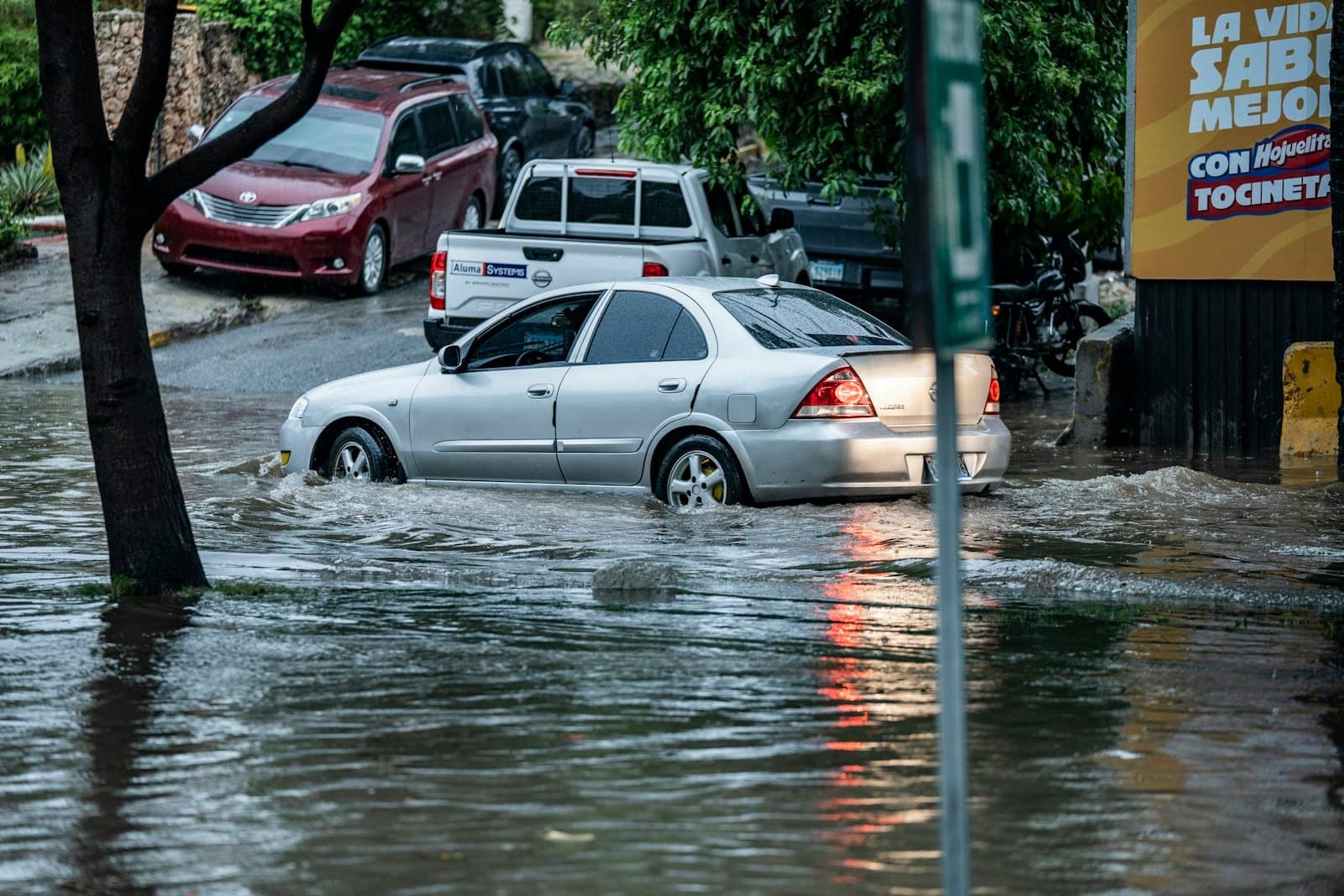
Kolkata gets heavy rain from roughly June to September, and low-lying lanes, underpasses and some older neighbourhoods can waterlog quickly after a hard downpour. A car parked overnight on a street that floods, or one that stalls while crossing deep water, can take water into the cabin, the engine air intake or the exhaust.
The trouble is that water damage doesn't always show up straight away. Carpets dry. The engine might start fine. But moisture trapped under the floor and inside wiring looms keeps working slowly, and corrosion on connectors can surface months later as a warning light that won't go away or a power window that stops halfway.
There's also a difference between a car that got its tyres wet and one that sat in water up to the seats. The first is common and usually harmless. The second is what you're trying to rule out. The checks below are about telling those two apart.
Start With Your Nose and Your Hands
Before you open the bonnet or start the engine, sit inside with the doors and windows shut for a couple of minutes. Then switch on the AC and blower. A car that has had water in the cabin often smells musty or sour, like clothes that dried slowly in a closed room.
A strong air freshener or a heavy perfume smell is worth noting too. It doesn't prove anything on its own, but if it's covering something, the musty note usually comes through once the blower has been running for a while.
Feel the carpets and seats
Press your palm hard into the carpet near the pedals, under the front seats and in the rear footwells. Then check the boot floor. You're feeling for dampness or a spongy, cold patch. Lift the floor mats too. Water often collects under the mats and the carpet backing, where it can't evaporate easily.
Check the seat foam by pressing down on the base of each seat. Seat foam soaks up water and holds it. If a seat feels damp or smells off when you press it, take that seriously.
Where Flood Water Leaves Marks
Water rarely cleans up after itself. It leaves fine silt, rust and a line where it stopped. Bring a small torch, even in daylight, because most of these spots are dark.
- Seat rails and bolts: Look along the metal rails under the front seats. Fresh-looking orange rust on an otherwise tidy car is a warning sign.
- Under the dashboard: Lie back in the driver's footwell and shine the torch up. Look for dried mud, rusty screws and a dull, chalky film on metal brackets.
- Spare-wheel well: Lift the boot floor. Standing water, a tide mark or silt around the spare tyre and jack is a strong clue.
- Seatbelts: Pull each belt out fully. Stains or a gritty feel near the bottom of the belt suggest it sat in muddy water.
- Door bottoms and sills: Open each door and check the lower edge and drain holes for dried mud or rust bubbling through paint.
- Lights: Look for fogging, droplets or a water line inside the headlamps, fog lamps and tail lamps.
One mark on its own can have an ordinary explanation. A leaking door seal or a blocked AC drain can also put water in a footwell. What you're looking for is a pattern: several of these signs at roughly the same height around the car.
Watch for things that are too new
A car that's several years old with brand-new carpet, mismatched seat covers or a freshly replaced headliner deserves a question. Replacement trim isn't suspicious by itself, since people do upgrade interiors, but ask why it was done and whether there's a bill.
Electrical and Mechanical Warning Signs
Water and electronics don't mix. Modern cars have control units, sensors and connectors spread across the cabin floor, the doors and the engine bay, so a flood damaged used car often shows small electrical oddities before anything else.
With the engine running, test everything that has a switch. Go slowly and don't skip anything just because it seems minor.
- Power windows and mirrors: Every window should run fully up and down at a steady speed, from both the driver's panel and its own switch.
- Central locking and remote: Lock the doors and open them again several times, using both the key and the switch inside.
- Dashboard lights: All warning lamps should light up briefly at ignition and then go out. A lamp that stays on, or one that never lights at all, needs explaining.
- Infotainment and speakers: Crackling speakers, a dead USB port or a screen that reboots on its own can point to moisture.
- Wipers, horn, indicators and AC: Check them all, including the rear wiper and demister if the car has them.
- Seat and steering adjusters: If the car has electric seats, run them through their full travel.
Under the bonnet and on the road
Pull out the engine oil dipstick and look at the oil. Milky or frothy oil can mean water or coolant has mixed in, and that needs a mechanic's opinion before you go further. Ask whether the air filter has been changed recently, and if it's easy to reach, look at it for water stains or silt.
On the test drive, listen for a rough idle, misfires or hesitation under load. Pay attention to the brakes, the gearbox and the steering. Grinding or uneven braking, jerky shifts in an automatic, or a clunk over bumps aren't proof of flood damage, but they all add to the picture.
Paperwork That Can Confirm or Clear the Car
Your eyes can only go so far. Papers fill the gaps, and an honest seller with a clean car usually has no problem sharing them.
Ask for the full service file. Workshop invoices that mention water ingress, an engine control unit replacement, a wiring harness repair or engine repairs after the car stalled in water are exactly what you want to know about. A gap of several months in an otherwise regular service record, especially right after a monsoon, is worth a direct question.
Ask about insurance claims too. If the car had a flood-related claim, the seller should be able to tell you what was repaired and show the bills. A renewal policy that shows a no-claim bonus suggests claim-free years, while a reset bonus is a reason to ask what the claim was for.
While you're checking papers, look the registration number up on the MoRTH eChallan portal, where you can search pending challans by vehicle number. It won't tell you about water damage, but unpaid fines are one more thing you don't want to inherit. It also helps to know that a normal transfer of ownership needs the registration certificate, insurance certificate and pollution certificate along with Forms 29 and 30, so ask for all of them up front.
Questions to Ask the Seller
Direct questions work better than hints. Ask them calmly and write down the answers. If the story changes later, that tells you something.
- Where was the car parked during the monsoon? A covered building parking is a different risk from an open street in a low-lying lane.
- Has the car ever stalled in water? If yes, ask what was checked and repaired afterwards.
- Has the carpet, seat foam or any wiring been replaced? Ask to see the bill for any answer that's yes.
- Has there been any insurance claim? Ask what it was for and which workshop did the repair.
- Why are you selling now? There's no wrong answer, but a vague one is worth a second question.
Get an Independent Inspection Before You Pay
Even a careful buyer can miss things in a parking lot. A trained inspector with a lift, a moisture check and a diagnostic scan tool can see underbody rust, stored fault codes and corrosion on connectors that you can't reach. If you're buying in Kolkata, you can book a car inspection before you commit to any pre-owned car, and it's worth doing even if the seller is someone you know.
Ask for the inspection report in writing, and read the electrical and underbody sections closely. Stored fault codes for several different systems at once can be a hint that water reached more than one module.
When to Walk Away
Not every sign means the car is ruined. A single damp mat after a rainy week, or a bit of surface rust on an old car's seat rails, can be normal. What should make you stop is a cluster of signs that point the same way.
- Walk away if: you find silt or tide marks in more than one place, the cabin smells musty after the AC runs, and there are electrical faults the seller can't explain.
- Walk away if: the seller refuses an independent inspection or won't share service and insurance papers.
- Think twice if: major interior parts were replaced recently and there's no bill or clear reason.
- Proceed carefully if: the car had a documented water-related repair, the bills are complete, and an inspection finds no ongoing faults.
As an illustration only, imagine a hatchback priced a little below similar cars nearby. That gap can look like a bargain, but if a damp wiring loom leads to repeated electrical repairs, the saving disappears fast. A fair price on a dry, documented car is usually the better deal.
If you'd rather start from cars that have already been looked over, you can browse used cars for sale in Kolkata and still run every check in this guide on the car you shortlist.
About Explicit Cars
Explicit Cars is a used-car business in Kolkata that helps people buy, sell and exchange pre-owned cars. You'll find us at 198, Rajdanga Main Rd, near Acropolis Mall, Kolkata, West Bengal 700107, call +91 9753888777, write to info@explicitcars.com, or get in touch with our team through the contact page.
Final Thoughts
A flood damaged used car can look perfect on a sunny afternoon. The signs are there, though, if you know where to look: the smell after the AC runs, silt in the spare-wheel well, rust on the seat rails, and electrical glitches that don't add up.
Take a torch, test every switch, read the service and insurance papers, and get an independent inspection before you pay. In a city where the monsoon is part of life, those twenty extra minutes are what keep a wet car from becoming your problem.
Frequently Asked Questions
Check the places that are hard to clean: under the seats, the seat rails, the spare-wheel well, under the dashboard and the bottom of the seatbelts. Silt, fresh rust and tide marks often survive a cleaning. A musty smell that returns after the AC has run for a few minutes is another strong clue.
No. Driving through shallow water that only wet the tyres is common and usually harmless. The concern is a car where water entered the cabin, the engine or the wiring. If any water-related repair was properly done, documented and an inspection finds no ongoing faults, it can still be a reasonable buy.
Look for power windows that stop or slow down, central locking that works only sometimes, warning lights that stay on, crackling speakers and an infotainment screen that restarts by itself. One small glitch can have another cause. Several at once are a stronger warning.
It can. If the earlier owner made a flood-related claim, the insurer's records and the repair bills will show what was fixed. Ask the seller for the current and previous policies and the claim details. A lost no-claim bonus is a reason to ask what the claim was for.
Yes. A professional inspection can find underbody rust, corroded connectors and stored fault codes that you won't see during a short test drive. Ask for a written report and read the electrical and underbody sections closely before you pay.
Get the car checked at a workshop quickly so corrosion doesn't spread. Collect your purchase documents and any written promises from the seller. Then speak to the seller and your insurer with those papers in hand.
Similar Blogs

Enjoyed this article?
Explore more stories, tips, and insights on our blog.